Labrador West is a distinct chapter in the Canadian story. The coastal communities of Labrador carry centuries of maritime history behind them; Labrador West is an industrial town carved out of the interior wilderness in the middle of the 20th century. It is a story that begins with a map drawn by a hockey player and ends with modern suburbs shipped in by train.
I. The Iron Man: A.P. Low and the Discovery
Albert Peter Low (A.P. Low) is widely considered the scientific “father” of Labrador West. While he never mined a single ounce of iron himself, he was the man who first told the world the wealth was there.
In the 1890s, the interior of the Labrador Peninsula was one of the last great blank spots on the map of North America. Between 1893 and 1895, working for the Geological Survey of Canada, Low carried out one of the most gruelling exploration surveys in Canadian history. Travelling thousands of kilometres by canoe and snowshoe with his Indigenous guides, he mapped the Labrador Trough, the geological belt that runs through present-day Labrador City and Schefferville.
Low documented huge formations of iron-bearing rock and famously called the deposits “inexhaustible” in his 1896 report. He also noted the hard truth of the era: the country was so remote and the climate so harsh that no one could mine it without a railway first. He was right, and it stayed that way until the 1950s.
The Man Behind the Map
Low was more than just a geologist; he was a figure of national significance.
- The Hockey Legend: Before his scientific career, Low was a goaltender for McGill University. In the 1883/1884 Montreal Winter Carnival tournaments, precursors to the Stanley Cup, he is credited with one of the first shutouts in organized hockey history.
- Arctic Sovereignty: In 1903, the Canadian government sent Low to command the ship Neptune on a voyage to the high Arctic to plant flags and formally claim the Arctic islands before the Americans or Norwegians could.
- The Legacy: Today, his name remains visible in the town he predicted but never saw. A.P. Low Primary School in Labrador City is named in his honor, as is “aplowite,” a pink cobalt mineral discovered in the region in 1965.
II. A Tale of Two Towns: The “Expo 67” vs. The “Wild West”
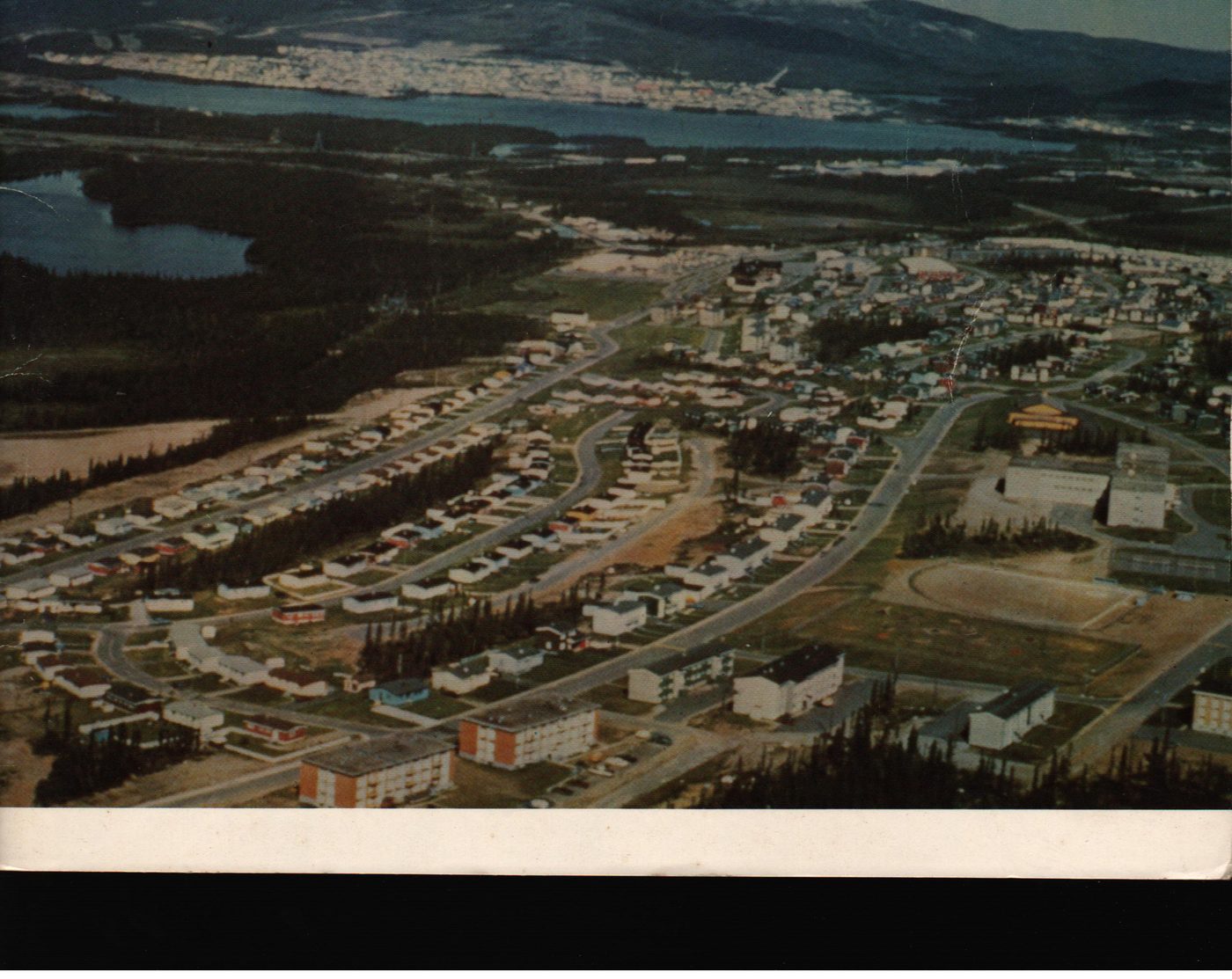
While often spoken of as a single entity today (“Lab West”), Labrador City and Wabush began as two very different communities.
Labrador City: The Frontier Boomtown
Built by the American conglomerate that ran the Iron Ore Company of Canada (IOC), Labrador City grew up almost on its own from 1958 onward. It was functional, gritty, and industrial, a town thrown up to solve a logistics problem.
- The Red Dust: The dust from the IOC mines was red hematite, staining the town pinkish-red and creating a constant cleaning battle for housewives.
- The Feudal System: For decades, IOC owned the housing. Workers lived in “Company Housing” as tenants, creating a dynamic where the company that paid your salary also fixed your toilet and could legally evict you during a strike.
Wabush: The Garden Suburb
Built later (1965) by a consortium of Canadian steelmakers, Wabush was designed by Fiset & Deschamps, the same architects who planned Expo 67 in Montreal.
- The Design: Wabush featured curved streets, cul-de-sacs to reduce traffic, and underground wiring to eliminate unsightly telephone poles. It looked like a modern suburb of Toronto dropped into the tundra.
- The “Snobush” Rivalry: Wabush Mines pushed hard for homeownership, offering subsidies to help workers buy their houses. That made for a more settled population, and a rivalry: Lab City workers saw Wabush as the “white collar” or management town and nicknamed it “Snobush,” even though its residents were unionized miners too.
- The Black Dust: While the town design was cleaner, the dust was not. Wabush mines produced black manganese/magnetite dust, which coated the town in black soot rather than red.
III. Evolution of Housing: From Canvas to Kit Homes
Before the curved streets and bungalows appeared, the early pioneers lived a rough existence defined by the “Bunkhouse.”
The Era of the “Ten Day Men”
In the late 1950s, housing evolved from “Tent City” (canvas tents heated by woodstoves) to ATCO trailers, and finally to the massive “H-Block” dormitories known as Single Men’s Quarters.
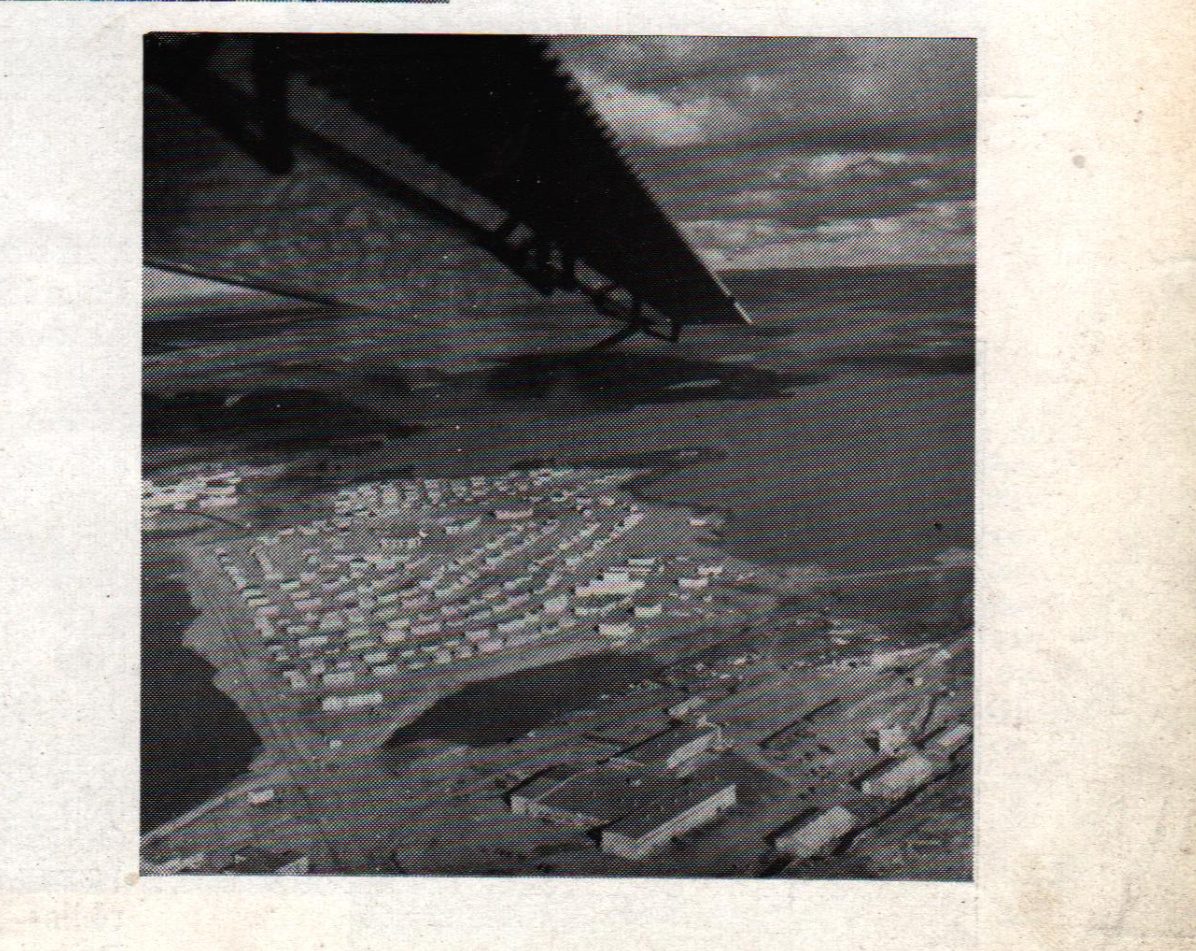
- Life in the Camp: Turnover was nearly 200%. Many men, known as “Ten Day Men,” would work just long enough to pay for their plane ticket home and then quit.
- The Mess Hall: To keep men from rioting in the isolation, the companies fed them steak, roast, and pastries around the clock. It was widely accepted that miners ate better than executives in Montreal.
- The Escape: Social life revolved around the Ashuanipi Social Club (“The Ash”), a cavernous beer hall where men blew off steam in a rowdy, strictly male environment.
The Train-Carried Suburbs
When the companies decided to build permanent family towns, they faced a logistical nightmare: there were no roads to bring in supplies. The solution was the railway.
- Kit Homes: Most of the original houses in Wabush were “kit homes” from suppliers like Nelson Homes in Alberta. The train dropped off a flatbed with a house in a box on it: pre-cut lumber, windows, shingles, and nails.
- The Weight Problem: Because shipping heavy brick and concrete by train was cost-prohibitive, almost all original Wabush houses were wood-frame construction with vinyl or aluminum siding. If you live in an original Wabush bungalow today, your living room likely rode the train up from Sept-Îles in 1965.
IV. Modern Struggles: The Housing Squeeze
The region’s “boom and bust” economy continues to distort the housing market today, turning public assets into battlegrounds.
- The Collegiate Suites (LCC): The former Labrador City Collegiate high school was sold and converted into housing for transient miners, symbolizing the shift toward a fly-in, fly-out workforce.
- The Tamarack Apartments: Conversely, the Tamarack Apartment Building, owned by the School District, had to be urgently renovated in 2023. In a town where corporate rents can hit $4,000/month, the public sector was forced to intervene to provide subsidized housing for teachers, who otherwise could not afford to live in the community they served.
From the initial maps of A.P. Low to the prefabricated streets of Wabush, the architecture of Labrador West remains a testament to the sheer logistical will required to build a home in the subarctic.
Did you grow up here in the early days? The kit homes, Tent City, the H-block bunkhouses, the Ashuanipi Social Club — if you remember the first years of Labrador City or Wabush, share what it was like in the comments below.
Comments
Loading comments…
Have a memory, a correction, or a name to add? Sign in with Google to leave a comment. Comments are reviewed before they appear.